

February 2026
This month’s highlights
Power LCR Meter (Part 1)
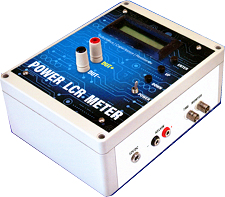
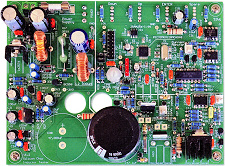
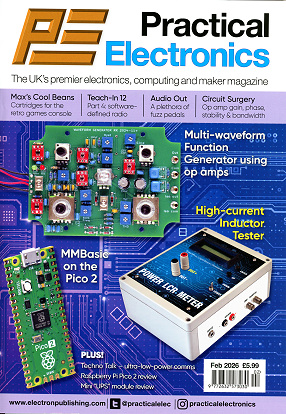
This is an LCR meter with a difference: it can deliver up to 30 (thirty) amps to inductors to enable you to observe their characteristics at higher power levels. This is especially useful for determining when and how an inductor saturates. Our project measures inductances from 50µH to 1H+, and can also measure very low resistances (1mΩ to 300Ω) as well as very high capacitance values (50nF to more than 1F). PIC32 microcontroller-based, 16×2 LCD info display. Full circuit details and principles of operation are described in Part 1 this month.
Versatile Waveform (Function) Generator
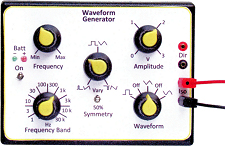
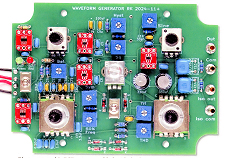
A waveform (or function) generator is a handy piece of test equipment to have on the workbench, helping constructors with a wide variety of tasks. Our project uses mostly standard off-the-shelf components to generate square, sine, triangle waveforms as well as pulse and ramps. It is self-contained and battery-operated, and will be an ideal companion for many areas of circuit development, construction and fault-finding.
Weird & Wonderful Arduino projects
(Part 14: time to play games!)
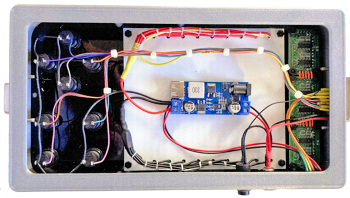
Max looks forward to the end-game, that is, bringing together all the various elements described in previous columns that will form his Arduino-powered retro games console.
Teach-In 2026
World of Wireless – An introduction to Radio and Wireless Technology
(Part 4: Software-defined radio)
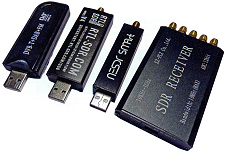
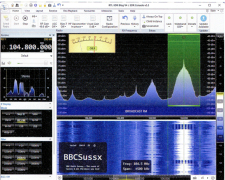
This highly-engaging tutorial series by Mike Tooley explores the latest trends in radio technologies, covering this month advances in software-controlled radio (SCR) and software-defined radio (SDR). There are some practical experiments that utilise SDR on a Windows PC to receive all manner of radio broadcasts, including local radio, FM, air traffic control and CW (Morse).
Circuit Surgery
Measuring the frequency response of a circuit using a PC sound card
Part 5: op amp frequency response and stability
Continuing an in-depth primer on the topic of measuring a circuit’s frequency response, this month some LTspice simulations are used to demonstrate further principles.
PicoMite for the Raspberry Pi Pico 2
This new MMBasic interpreter for the Raspberry Pi Pico 2 and Pico 2 W exploits the new features of the Raspberry Pi Pico 2. It’s a comprehensive programming environment that converts the Pico 2 into an easy-to-use and powerful platform for both beginners and expert users alike.
Review: Raspberry Pi Pico 2
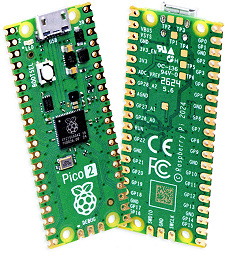
This month we explore the Pico 2 microcontroller board, and summarise some of the new features and enhancements that this latest version has to offer.
Techno Talk
Welcome to the sensorium
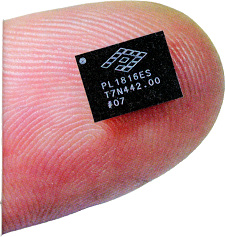
Max describes some astonishing developments in the field of miniaturised accelerometers and power delivery components.
Audio Out
The Penta-Fuzz ‘bender’ PCB
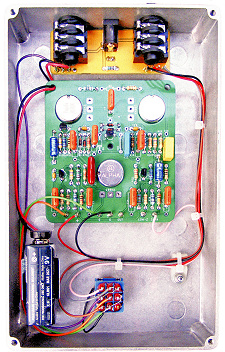
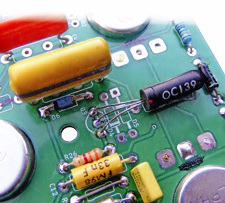
Our analogue audio expert describes – and solves! – many practical aspects surrounding the construction of his latest designs for his hand-made, high grade guitar pedals. Rotary pots, Mullard C280 capacitors and germanium transistors built on modern PCBs will all be found here!
Using electronic modules:
Mini Uninterruptible Power Supply (UPS)
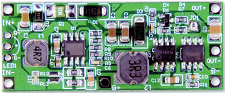
We lift the lid on a very cheap (£1) UPS 9V or 12V module available off the shelf, suitable, we found, for keeping a small appliance like a home router running for a few tens of minutes.
The Fox Report
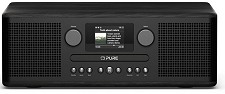
Barry Fox brings news of the PURE C-D6i, a rare combination of DAB+ and FM stereo radio, with CD player, Bluetooth, internet radio and USB. Read about Barry’s views in this special investigation.
Next month
In the March 2026 issue of Practical Electronics – Rotating Light for Models; DIY 433MHz transmitter Module; USB-programmable frequency Divider.
Printed Circuit Boards
We supply PCBs for all our projects going back to 2013.
New PE service – Programmed PICs
Buy programmed PICs for most of our projects.